
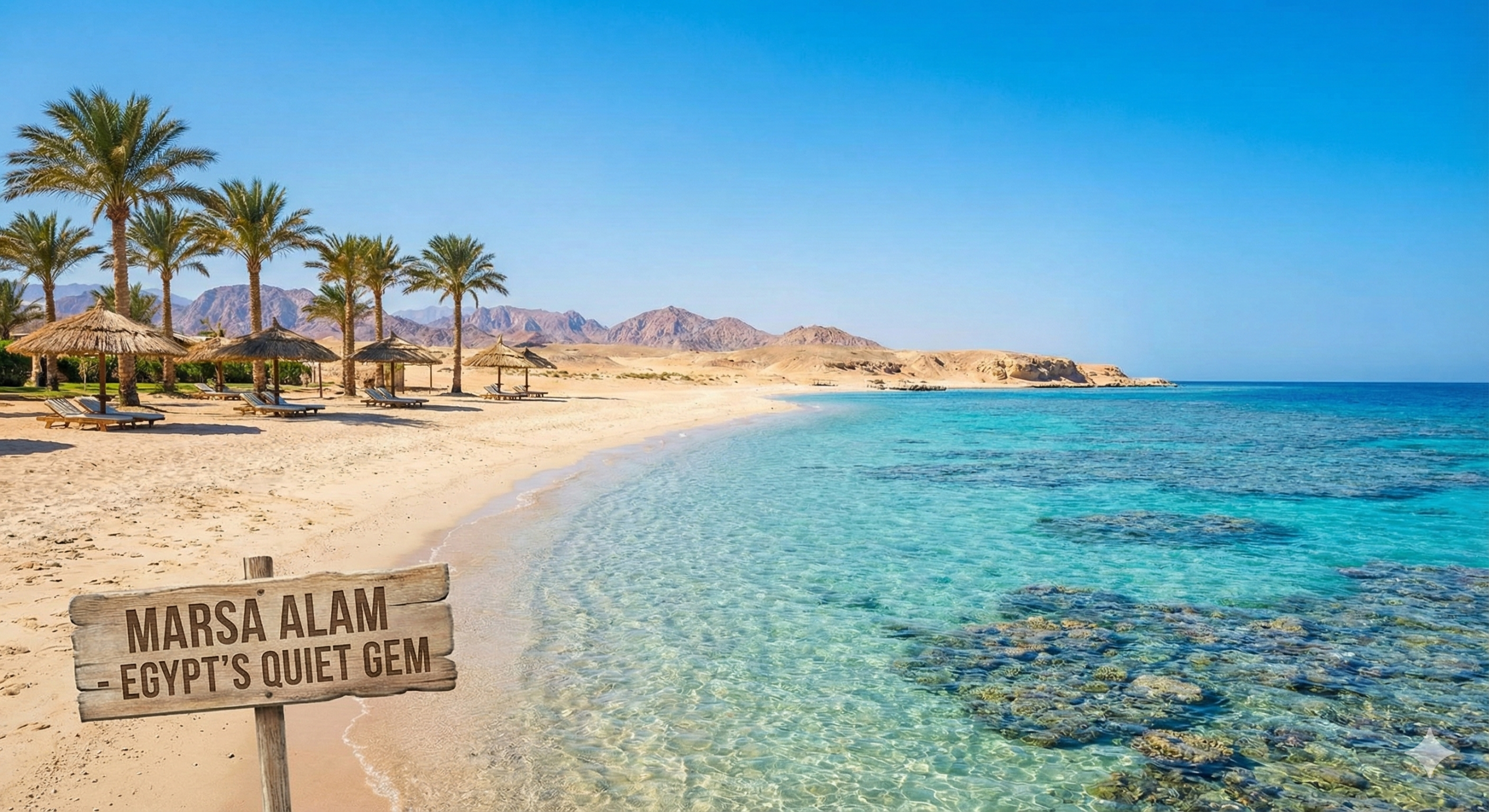
Marsa Alam: Egypt’s Quiet Red Sea Gem
For years, Egypt’s Red Sea coast has been synonymous with busy resort towns like Hurghada and Sharm El-Sheikh. Yet far to the south, quietly developing at its own pace, lies Marsa Alam — a destination that feels untouched compared to its neighbors. With pristine coral reefs, uncrowded beaches, and a slow, authentic coastal rhythm, Marsa Alam offers travelers something increasingly rare: space to breathe.
A Different Kind of Red Sea Destination
Marsa Alam sits on the southeastern shoreline of Egypt, transitioning gradually from desert plains into vibrant turquoise waters. Until recently, it was a small fishing village with limited infrastructure. Today, it remains smaller and calmer than other Red Sea hubs, which is exactly why many travelers fall in love with it.
Unlike high-density resort strips, Marsa Alam spreads its hotels and dive centers across long coastal stretches. You will find luxury properties, eco-lodges, and boutique accommodations tucked discreetly along the coastline rather than towering over it. The result is a quieter atmosphere that appeals to divers, couples, families, and travelers seeking relaxation without losing access to world-class activities.
Diving and Snorkeling: Among the Best in the Red Sea
If there is one reason Marsa Alam has gained global attention, it is the underwater world. The coral reefs here are exceptionally well preserved thanks to reduced tourism pressure and strong marine protection efforts.
Signature dive and snorkel sites include:
- Elphinstone Reef: Known for dramatic drop-offs, soft corals, and encounters with oceanic whitetip and hammerhead sharks.
- Shaab Samadai (Dolphin House): A horseshoe-shaped reef where spinner dolphins are regularly seen in the wild.
- Abu Dabbab: A shallow bay famous for its resident dugong, giant green turtles, and easy entry for beginner snorkelers.
With visibility often over 30 meters, the Red Sea’s clarity reveals vibrant coral gardens, schools of colorful reef fish, rays, and occasionally whale sharks. Operators in Marsa Alam emphasize environmental stewardship, making it an outstanding place to dive responsibly.
Beaches and Relaxation
Marsa Alam’s coastline is characterized by long sandy stretches broken by rocky coral shelves. Many resorts feature private beaches, but there are also public areas where you can enjoy quiet shoreline walks, tide pools, and sunsets that reflect off calm waters.
Wind conditions are generally gentle, making it ideal for swimming, stand-up paddleboarding, and kayaking. Because development remains controlled and set back from the water, night skies are remarkably clear — stargazing becomes part of the experience.
Encounters With Nature and Local Culture
Beyond the shoreline, Marsa Alam is framed by Eastern Desert landscapes. These arid mountain backdrops provide opportunities for:
- Jeep safaris
- Bedouin camp visits
- Desert star tours
- Camel or quad excursions through canyons and dunes
Many guided tours incorporate Bedouin hospitality, offering traditional tea, fresh bread baked over the fire, and introductions to desert ways of life. While simple in nature, these experiences create genuine cultural connection rather than staged performances.
Wadi el Gemal National Park
Approximately an hour south of Marsa Alam lies Wadi el Gemal National Park, translating to “Valley of the Camels.” The park blends desert ecosystems with coastal mangroves and coral reefs. Birdwatchers, amateur geologists, and hikers will appreciate the granite formations, ancient Roman ruins, and wildlife including ibex, foxes, and numerous migratory species.
Boat trips and guided hikes help visitors explore areas that would otherwise be inaccessible, while maintaining strong conservation standards.
Climate and Best Time to Visit
Marsa Alam enjoys warm temperatures year-round. Summers can be hot, particularly inland, but constant sea breezes create comfortable conditions along the coast. The most popular months are:
- March to June – Warm water, excellent visibility.
- September to November – Ideal temperatures and quieter travel flow.
Winter remains pleasant for sunbathing, although evening breezes can be cool. Divers often use wetsuits year-round.
Getting There and Getting Around
Marsa Alam International Airport connects the region to several European hubs and Cairo. Alternatively, travelers can land in Hurghada and drive approximately three to four hours along a scenic coastal highway.
Transportation options include hotel shuttles, private transfers, and organized excursions. Because distances between attractions can be long and the desert terrain is unforgiving, independent driving is not always recommended unless you are well prepared.
Who Marsa Alam Is Best For
Marsa Alam is not a nightlife destination. You will not find large clubs, crowded promenades, or loud tourist zones. Instead, it suits:
- Scuba divers and snorkelers seeking pristine reefs
- Couples looking for quiet luxury
- Families wanting safe beach environments
- Nature travelers interested in desert landscapes and marine life
- Anyone trying to avoid overdeveloped resort areas
For travelers who measure value by peace, authenticity, and connection to nature, Marsa Alam is often unforgettable.
Practical Tips
- Bring reef-safe sunscreen and respect marine-protection rules.
- Book certified dive centers with clear environmental practices.
- Hydrate constantly; desert climates dehydrate quickly.
- Confirm whether your accommodation includes transportation, as taxis are limited.
- Check marine excursion rules to ensure sustainable wildlife interactions.
Final Thoughts
Marsa Alam represents what many travelers claim to want but rarely find anymore: beautiful scenery without the crowds. With its untouched reefs, wide beaches, and thoughtful approach to development, it offers a refined yet natural Red Sea experience. Whether you are discovering scuba diving for the first time, chasing bucket-list underwater encounters, or simply seeking tranquility, Marsa Alam delivers a sense of serenity that is becoming increasingly rare.


Comment (0)